

Understanding CCCA: The Silent Hair Loss Condition Every Black Woman Should Know About
Restore Hair Now Journal
Evidence-Informed Hair & Scalp Education
Volume 1 • Issue 1
Category: Hair Loss Conditions
Reading Time: 8 minutes
Written by Linda Boyce
Certified Trichologist | Non-Surgical Hair Replacement Specialist | Certified Health Coach
What Is CCCA?
One of the most heartbreaking conversations I have with clients is explaining that not all hair loss is the same.
Many women assume their hair has stopped growing because of stress, menopause, age, or a hairstyle. While these factors can certainly affect the hair, there is another condition that deserves immediate attention because the consequences can be permanent if left untreated.
That condition is Central Centrifugal Cicatricial Alopecia (CCCA).
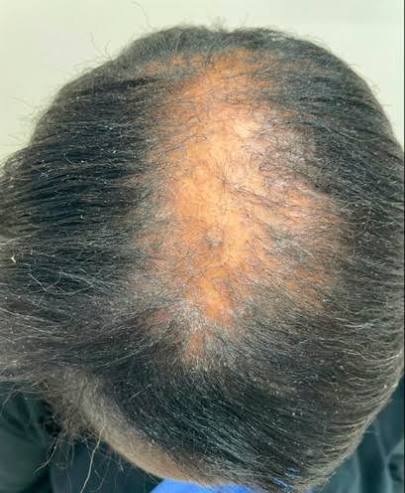
CCCA is the most common form of scarring hair loss affecting Black women. Unlike temporary shedding, CCCA causes inflammation around the hair follicle that may eventually replace healthy follicular tissue with scar tissue. Once a follicle has been permanently scarred, it is generally no longer capable of producing hair.
The encouraging news is that recognizing the condition early may help preserve remaining follicles and support long-term scalp health.
Why Is CCCA Called a Scarring Alopecia?
The word cicatricial simply means scarring.
Think of each hair follicle as a tiny factory responsible for producing hair.
When chronic inflammation develops around that follicle, the body’s normal healing response can gradually replace healthy follicular structures with scar tissue. As this process continues, the follicle loses its ability to produce new hair.
This is why early recognition matters so much.
CCCA is not simply about losing hair.
It is about protecting the follicles that remain healthy before permanent damage occurs.
Where Does CCCA Usually Begin?
One of the defining characteristics of CCCA is its location.
It most often begins:
- At the crown (vertex) of the scalp
- As subtle thinning or a widening part
- Then gradually spreads outward in a circular pattern
Many women don’t notice the early changes because the progression is often slow and can be hidden by surrounding hair.
Early Warning Signs
Pay attention if you notice:
- Thinning at the crown
- A widening part
- Hair that no longer seems to grow in one area
- Tenderness or soreness on the scalp
- Burning or itching sensations
- Increased hair breakage around the crown
- A smooth or shiny appearance where hair previously grew
- A family history of crown thinning
These signs do not automatically mean you have CCCA, but they do warrant evaluation by an appropriate healthcare professional or a qualified trichologist.
Why Are Black Women More Frequently Affected?
Researchers believe several factors contribute to the higher prevalence of CCCA among Black women.
These may include:
Hair Structure
Afro-textured hair has a tightly coiled structure that naturally creates points of mechanical stress along the hair shaft.
Genetics
Research suggests that genetics may play a role in some cases of CCCA, although not everyone with a family history will develop the condition.
Mechanical Stress
Repeated tension from certain hairstyles may contribute to ongoing stress around the follicle.
Chemical Processing
Relaxers, bleaching, and excessive heat may increase scalp stress, particularly when combined with inflammation or mechanical tension.
Chronic Inflammation
Inflammation appears to be a key feature of CCCA. Ongoing inflammatory activity may contribute to follicular damage over time.
Linda’s Clinical Perspective
Over the years, I’ve noticed that many women focus on the hair they can see, while very little attention is given to the scalp beneath it.
Healthy hair begins with a healthy scalp.
That’s why my consultations go beyond looking at the hair itself. I evaluate the scalp environment, discuss your health history, review lifestyle factors, and help identify potential contributors that may be affecting your hair.
Hair loss is rarely caused by a single factor. In many cases, genetics, inflammation, nutrition, hormones, stress, and hair care practices all play a role. Understanding the whole picture allows us to create a more informed plan for protecting your scalp and supporting your hair.
Research Spotlight
Current research indicates that CCCA is the most common primary scarring alopecia affecting Black women. Scientists continue to investigate the roles of genetics, inflammation, and environmental factors in its development.
While our understanding of CCCA has grown considerably, research is ongoing, and new insights continue to emerge.
Myth vs. Fact
Myth: CCCA only happens to older women.
Fact: Although it is commonly diagnosed in middle age, CCCA can develop earlier. Recognizing changes promptly is more important than age alone.
Myth: If my scalp doesn’t hurt, I don’t have CCCA.
Fact: Some people experience tenderness, itching, or burning, while others have few or no symptoms in the early stages.
Myth: Hair oils alone can reverse CCCA.
Fact: Oils may support scalp care, but they do not reverse scarring. Early evaluation and appropriate management are important.
Frequently Asked Questions
Can CCCA be cured?
There is currently no cure. The primary goal is to identify the condition early and help slow progression while supporting scalp health.
Will my hair grow back?
Hair regrowth depends on the stage of the condition. Follicles that have been permanently scarred generally cannot produce new hair, making early intervention especially important.
Is CCCA hereditary?
Research suggests genetics may contribute in some individuals, but CCCA is likely influenced by multiple factors.
Can protective styles cause CCCA?
Protective styles themselves are not necessarily harmful. However, excessive tension or prolonged mechanical stress may contribute to follicular damage in susceptible individuals.
Should I have my scalp evaluated even if the thinning is mild?
Yes. Early changes are often easier to assess before significant scarring develops.
Next Steps
If you’ve noticed thinning at the crown, scalp tenderness, or changes in your hair density, don’t ignore those signs.
Early evaluation can provide valuable information about the health of your scalp and help determine appropriate next steps.
Call to Action
At Restore Hair Now, we believe education is the first step toward healthy hair.
If you’re concerned about crown thinning or changes in your scalp, schedule a comprehensive hair and scalp evaluation. Together, we’ll assess your scalp health, discuss potential contributing factors, and develop an individualized plan to support your hair and scalp wellness.
Related Posts

Vitamins, Minerals & Hair Loss: What If Your Body Isn’t Absorbing What You Need?
-
Posted by
Linda
Eating a healthy diet does not always guarantee that your body is absorbing every nutrient effectively. Learn how nutrient status, digestion, absorption, and deficiency can influence overall health and hair growth.